CRM – TechnologyOne
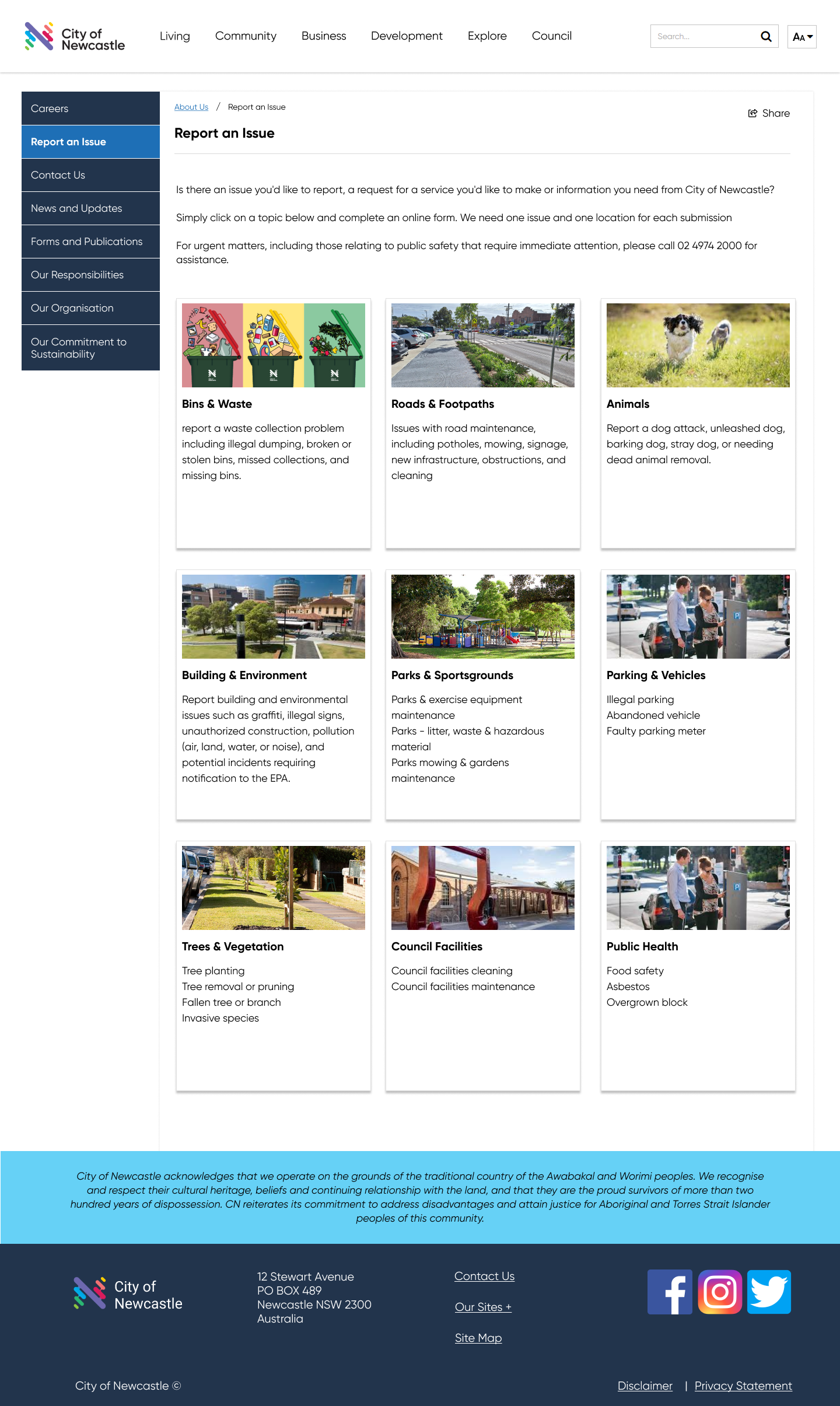
Replacing City of Newcastle's legacy PDF form catalog with an intuitive digital service catalog.
↗ View Live Project
The Problem
The City of Newcastle's service catalog was a long, undifferentiated list of PDF forms — one of the most friction-heavy ways to deliver digital services. Residents had to download, print, fill by hand, and return forms in person or by mail. Finding the right form was difficult, the language was bureaucratic, and there was no ability to track request status online. We conducted customer interviews using Lookback to understand the experience from the resident's perspective. The sessions revealed consistent pain points: residents couldn't find the form they needed, didn't understand the terminology used in form labels, and frequently gave up and called the contact centre instead — creating avoidable inbound call volume for the council.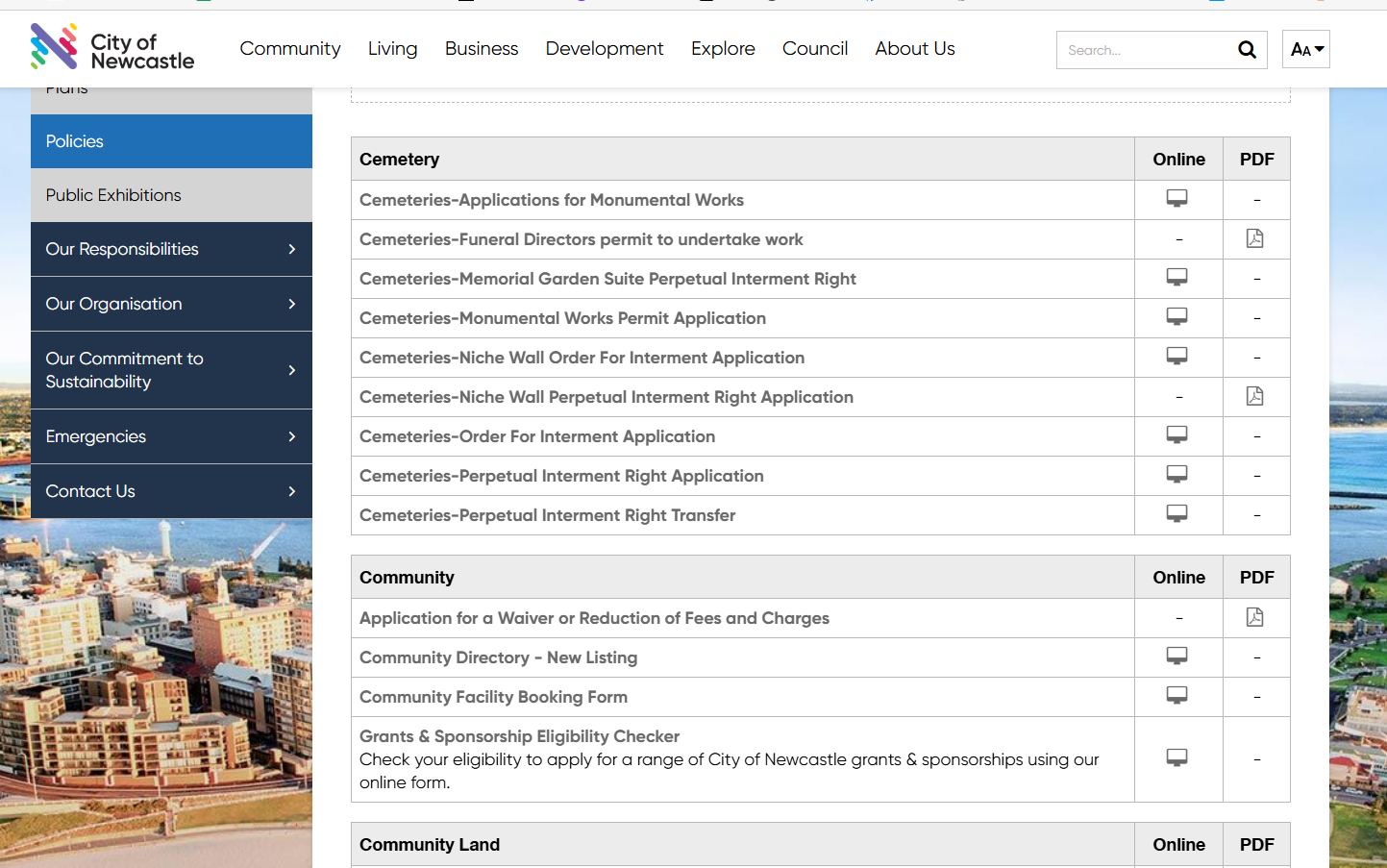
Problem - Long list of PDF forms
From the interviews, three core problems emerged:
Discoverability — residents didn't know which category their request belonged to, so they couldn't navigate to the right form.
Language barrier — form names used internal council terminology that residents didn't recognise.
No digital pathway — every request required a PDF, removing any possibility of automated processing, status tracking, or pre-population of known customer data.
The redesign had two parallel workstreams: restructuring the service catalog information architecture so residents could find what they needed, and redesigning the individual forms to be completable entirely online through TechnologyOne CRM.
Service Catalog — Information Architecture
Working with data from the customer interviews, We used Optimal Workshop to run treejack testing — asking participants to find specific services within proposed category structures without visual design cues. This isolated whether the IA itself made sense, independent of layout or styling. I designed two versions of the catalog structure using different grouping logic — one organised by service type, one organised by resident need — and ran A/B testing to determine which approach performed better. The winning structure was selected based on task success rates and time-to-find metrics from the treejack results.Forms Redesign
I redesigned the major customer request forms in Figma — restructuring field order, simplifying language, removing redundant fields, and adding inline guidance for complex inputs. Each form was prototyped and tested with real residents using Lookback before being finalised. The completed designs were handed off to the ERP consultant for development inside TechnologyOne CRM — enabling end-to-end digital processing of requests, automated routing to the relevant council team, and real-time status visibility for residents.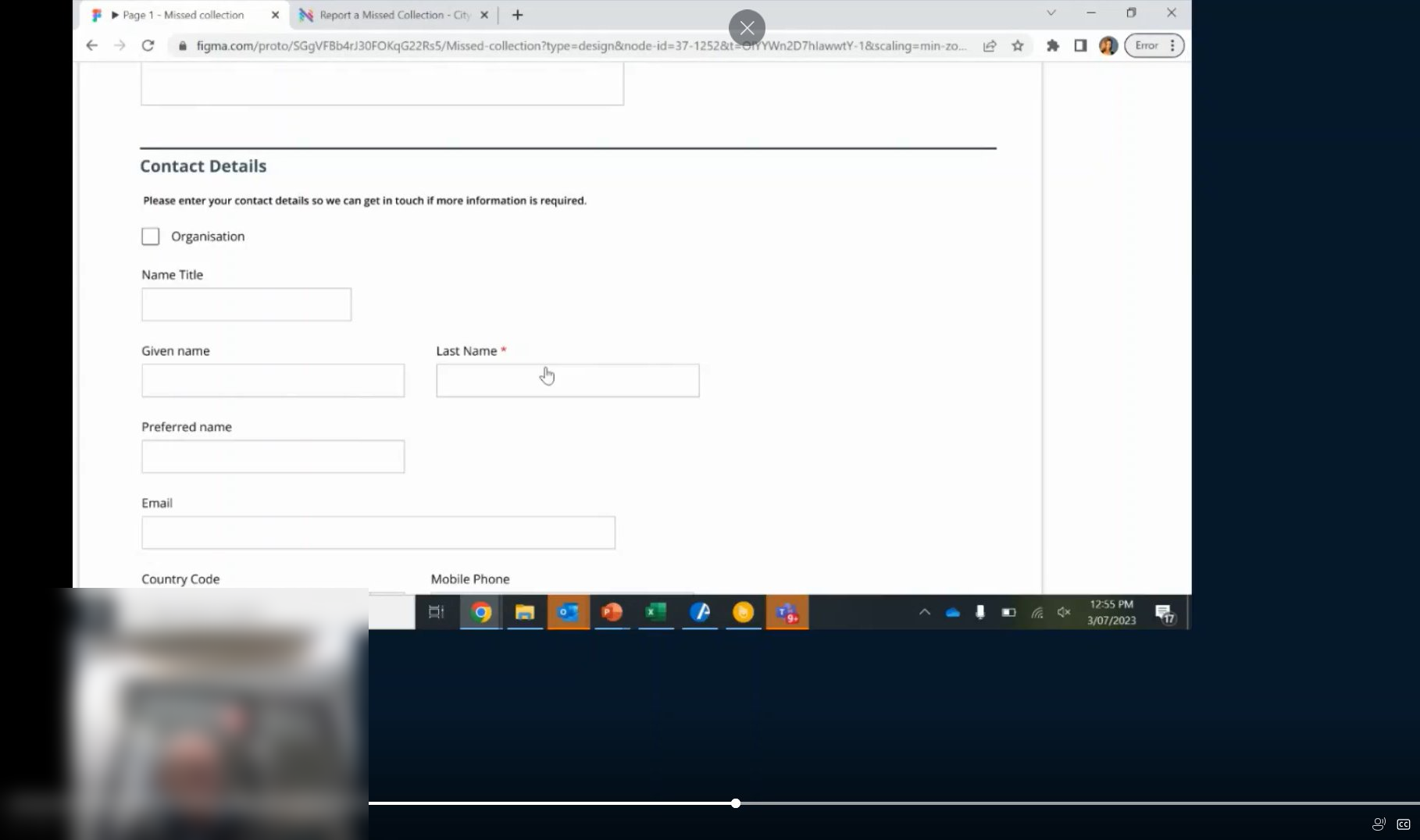
Prototype testing
Fully digital service catalog — replaced the legacy PDF list with a structured, searchable online catalog organised around how residents think about their needs, not how the council is internally structured.
Improved form discoverability — treejack testing and A/B testing produced an evidence-based IA with measurably higher task success rates than the original structure.
Reduced contact centre load — by making services findable and forms completable online, the redesign directly addressed the call-deflection goal identified in the research phase.
ERP-integrated digital forms — redesigned forms handed off to TechnologyOne CRM development, enabling automated routing, status tracking, and integration with the council's back-office systems — replacing a fully manual paper process.
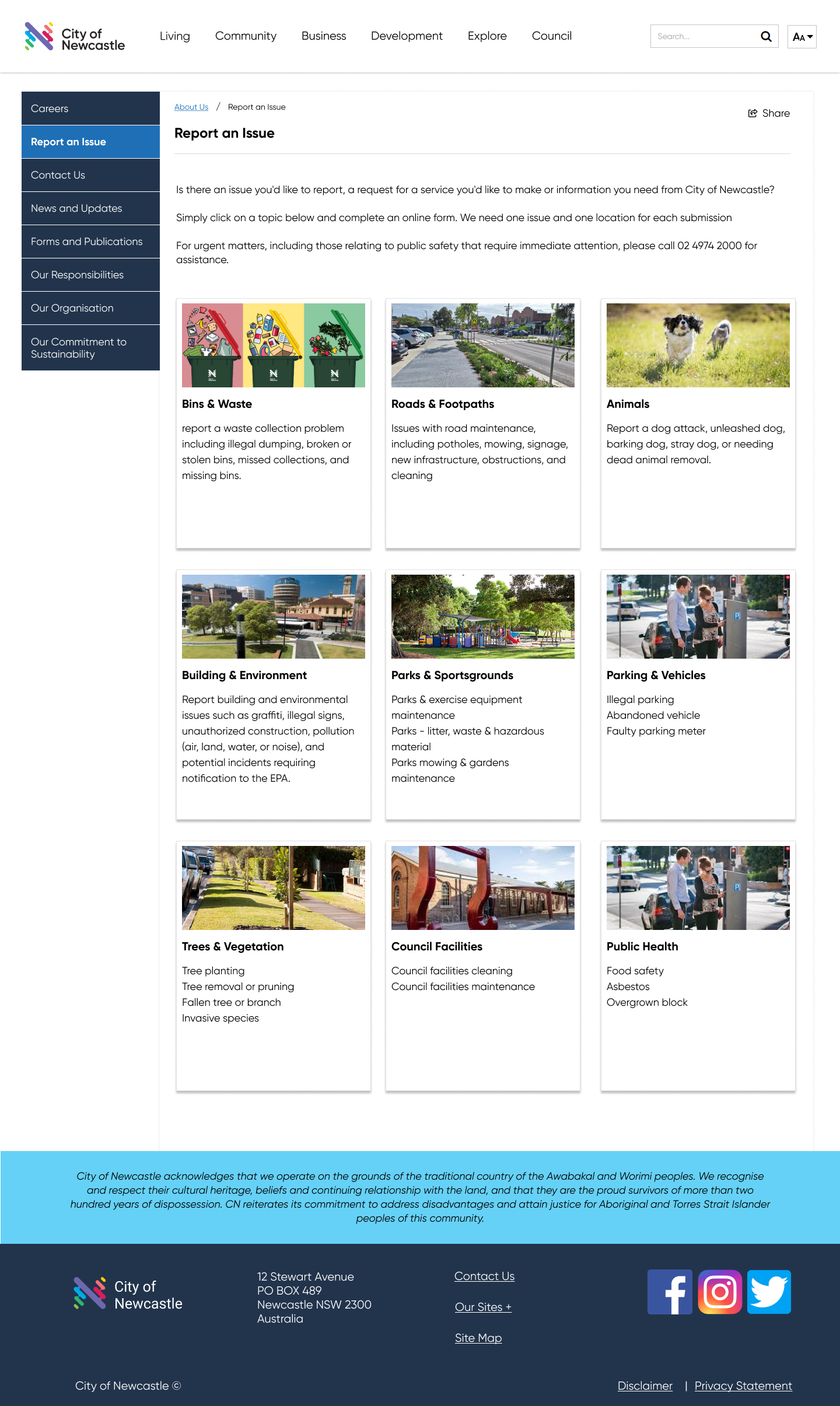
Service catalog