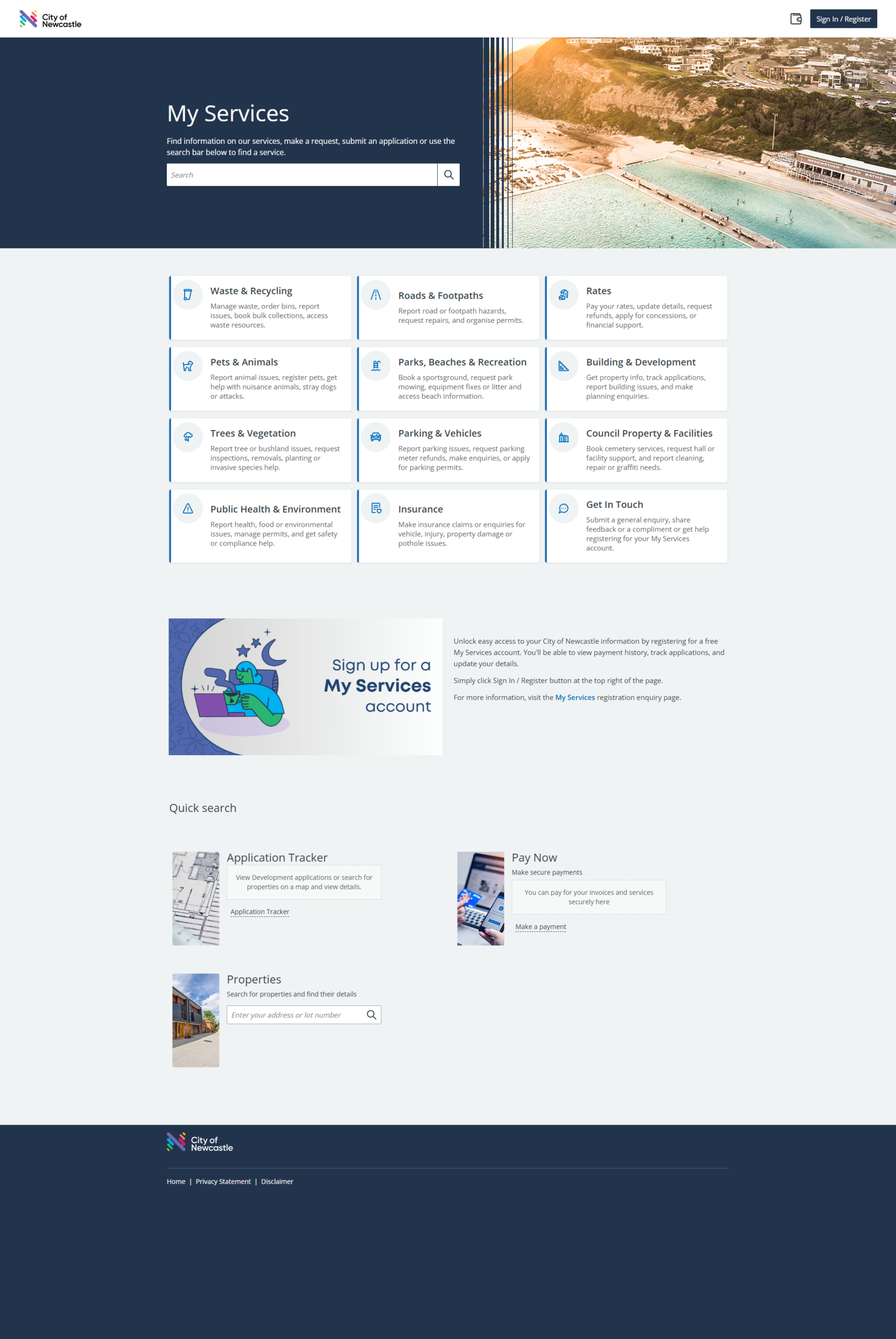
DXP LG
Digital Experience Platform leveraging TechnologyOne technology to enhance customer satisfaction, and provide an exceptional, intuitive digital experience for City of Newcastle community.
↗ View Live Project
Background & Context
The City of Newcastle was implementing TechnologyOne's DXP LG platform — a SaaS-based Digital Experience Platform integrated natively with the TechnologyOne ERP system. The goal was to move residents away from phone-based service requests and toward a modern, self-service digital portal that worked across all devices. At the outset, the council's existing digital channels were fragmented. Residents often couldn't find the right form, didn't know the status of their requests, and frequently resorted to calling the customer service team. Staff, in turn, were spending significant time on manual data entry and call handling that could be automated.Research Activities
I partnered with the Customer Experience team to run a structured discovery phase, combining qualitative and quantitative research methods: User interviews — sessions with residents across different demographics to understand how they currently interact with council services and where friction occurred. Common pain points included: difficulty locating the right service, no visibility into request status, and a lack of mobile-friendly options. Stakeholder workshops — participated sessions with internal staff (customer service, planning, waste, and rates teams) to map existing workflows and identify where manual hand-offs were causing delays. Analytics review — analysed call centre data to identify the top 10 service categories generating the most inbound calls. This directly informed which services needed to be prioritised in the digital portal. Accessibility audit — ran a WCAG 2.2 accessibility audit of the existing council website using SiteImprove, identifying critical gaps that the new platform would need to address from day one.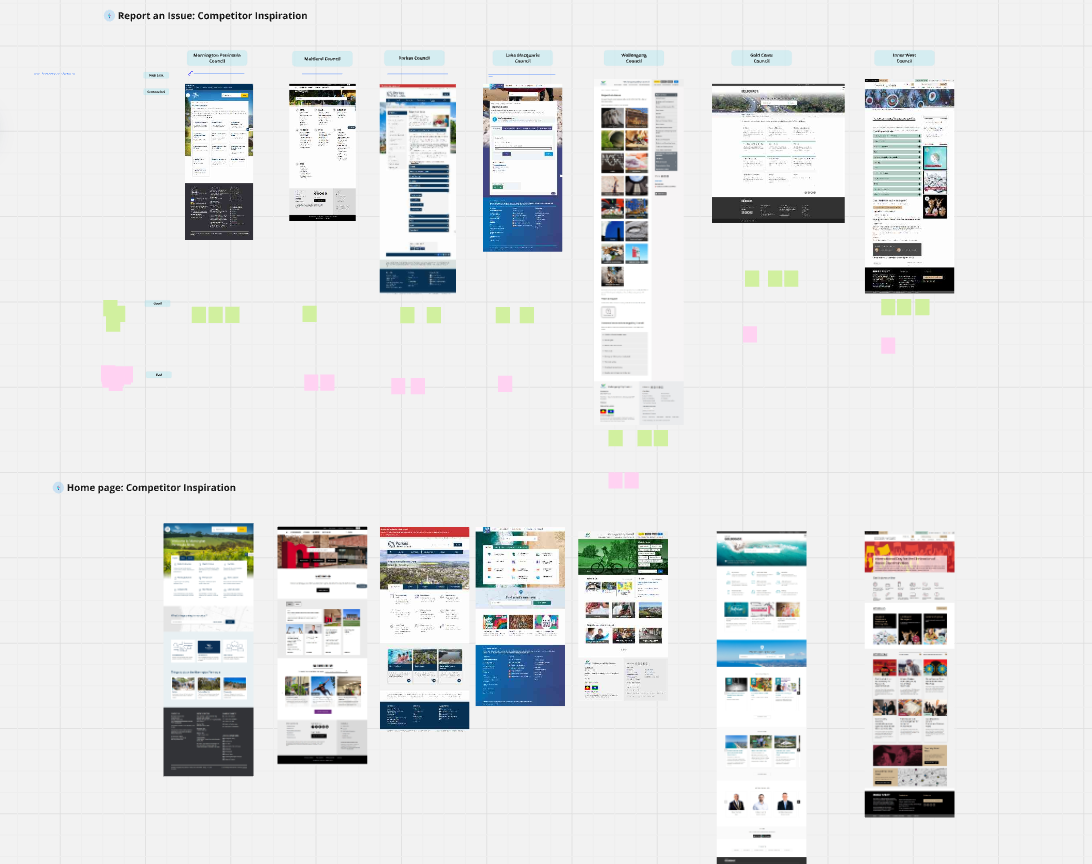
Market research
Synthesising the Research
Following the discovery phase, I participated in a synthesis workshop with the Customer Experience team using affinity mapping in Miro. We grouped insights into themes around navigation, task completion, trust, and accessibility — surfacing clear patterns in how residents were failing to self-serve.Key Insights
Three core problems emerged from the research synthesis: Visibility gap: Residents had no way to see the status of submitted requests, leading to repeated follow-up calls. The top call driver — "What's happening with my request?" — accounted for nearly 6.7% of avoidable inbound calls. Discovery friction: The existing site's information architecture buried common services under multiple layers of navigation. Over 60% of users in testing couldn't find their desired service within 30 seconds. Accessibility barriers: The legacy platform failed WCAG 2.2 AA at multiple checkpoints, excluding residents relying on screen readers, keyboard navigation, or high-contrast modes.Problem Statement
Newcastle residents need a single, intuitive digital portal that allows them to find, submit, and track council service requests — on any device — without requiring phone-based assistance, while ensuring no resident is excluded due to accessibility barriers.How Might We…
From the problem statement, we generated a set of HMW questions to guide ideation: How might we make service request status transparent and proactive? How might we reduce the number of steps to complete a common request? How might we ensure every interaction meets WCAG 2.2 AA from launch?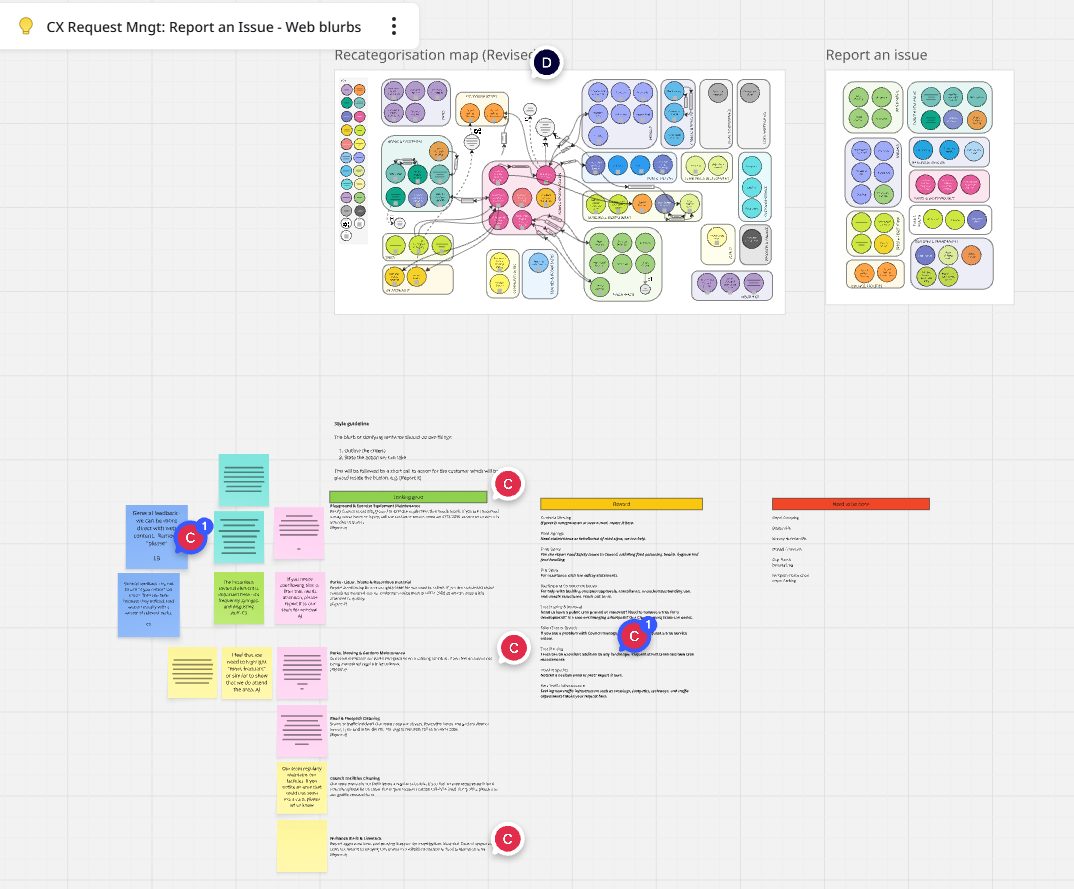
MIRO collaboration session
Information Architecture & User Flows
I mapped a new information architecture for the My Services portal in Figma, rationalising the service catalogue from over 80 disparate pages into a structured taxonomy of 12 service categories. Card sorting sessions with residents validated the groupings before any wireframing began.Wireframing & Prototyping
Working within TechnologyOne's DXP LG no-code configuration framework, I designed wireframes for the key resident journeys: submitting a service request, tracking request status, booking a council facility, and paying rates online. Each flow was designed to be completable in under 3 steps. Interactive prototypes were built in Figma and tested with a representative group of residents recruited through Askable. Three rounds of usability testing were conducted, with findings fed back into iterative design improvements after each round.Design System & Accessibility
I configured the DXP LG platform's design system to align with the City of Newcastle's brand standards — typography, colour palette, iconography — while embedding accessibility at the component level. Every interactive element was tested against WCAG 2.2 AA checkpoints using Stark (within Figma) before sign-off. I also created comprehensive web standards documentation — a style guide covering component usage, colour contrast ratios, heading hierarchy, and form labelling — which was adopted by 80% of the council's digital teams, creating lasting design consistency beyond this single project.CRM Integration Design
A significant design challenge was connecting the resident-facing portal to TechnologyOne CRM forms on the back end. I designed the article templates and field mapping to ensure content owners have single source of truth to look into when answering a phone call from a customer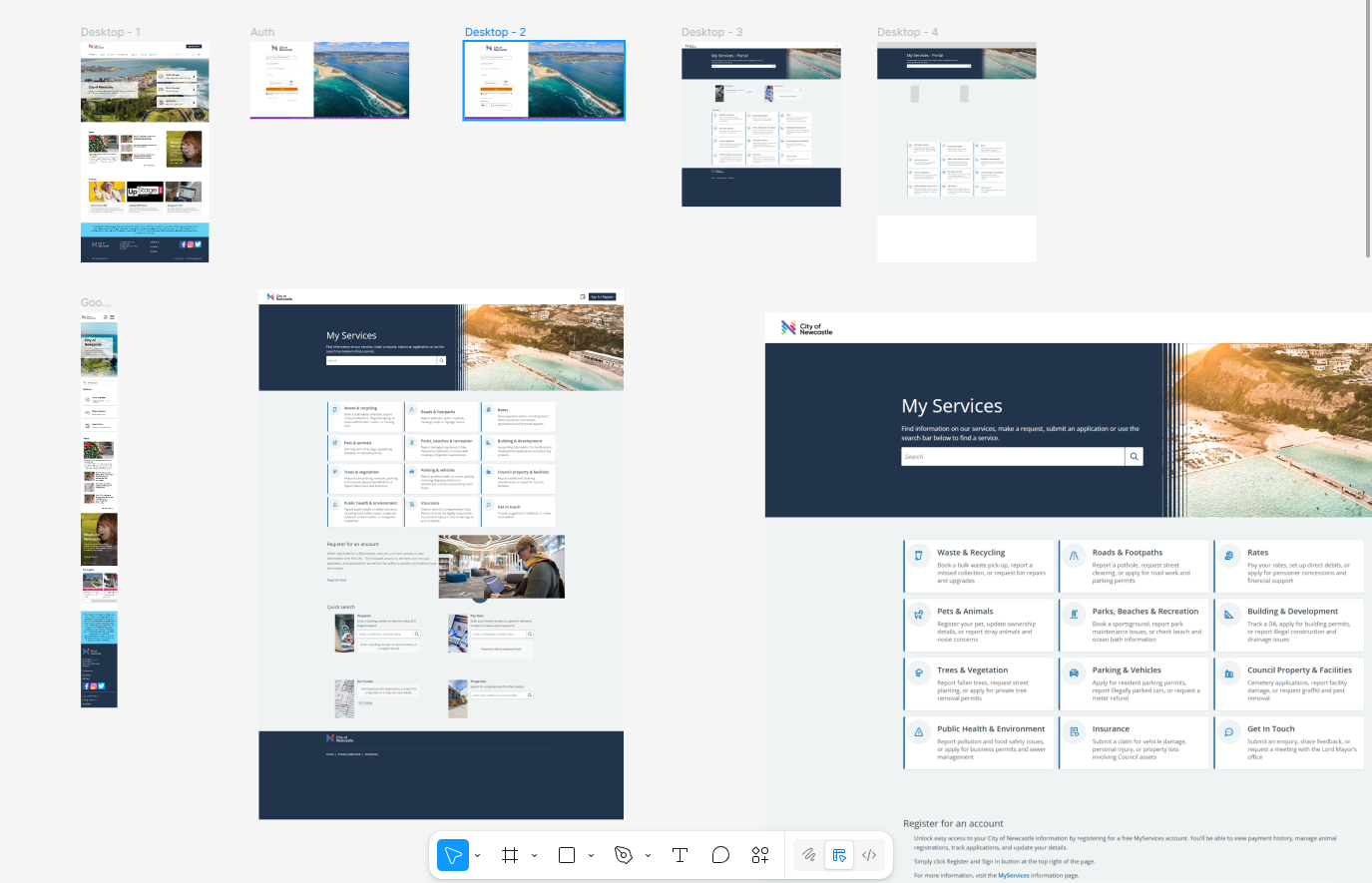
Wireframing
Launch & Outcomes
The DXP LG My Services portal launched across the City of Newcastle's digital channels, becoming the primary digital touchpoint for resident service requests. The designed experience focused on three outcomes: reduced call volume, improved accessibility compliance, and faster task completion. View our project sponsor's post on LinkedIn for more statsMeasurable Results
1600+ registered users: In just over a month Streamlined service requests: The CRM-integrated form design eliminated manual data re-entry for customer service staff, directly reducing average handling time and freeing the team to focus on complex enquiries. 9700+ Requests lodged: One step portal makes it easy for customers to find the correct form and the form and the article layout is consistent across the system which makes it easy to learn the new system and quickly lodge forms.What I Learned
This project reinforced how powerful the intersection of UX rigour and technical constraint can be. Working within TechnologyOne's no-code platform required creative problem-solving — designing experiences that pushed the platform's capabilities while remaining maintainable by non-developers. It also deepened my belief that accessibility isn't a post-launch retrofit; it's a design input from day one.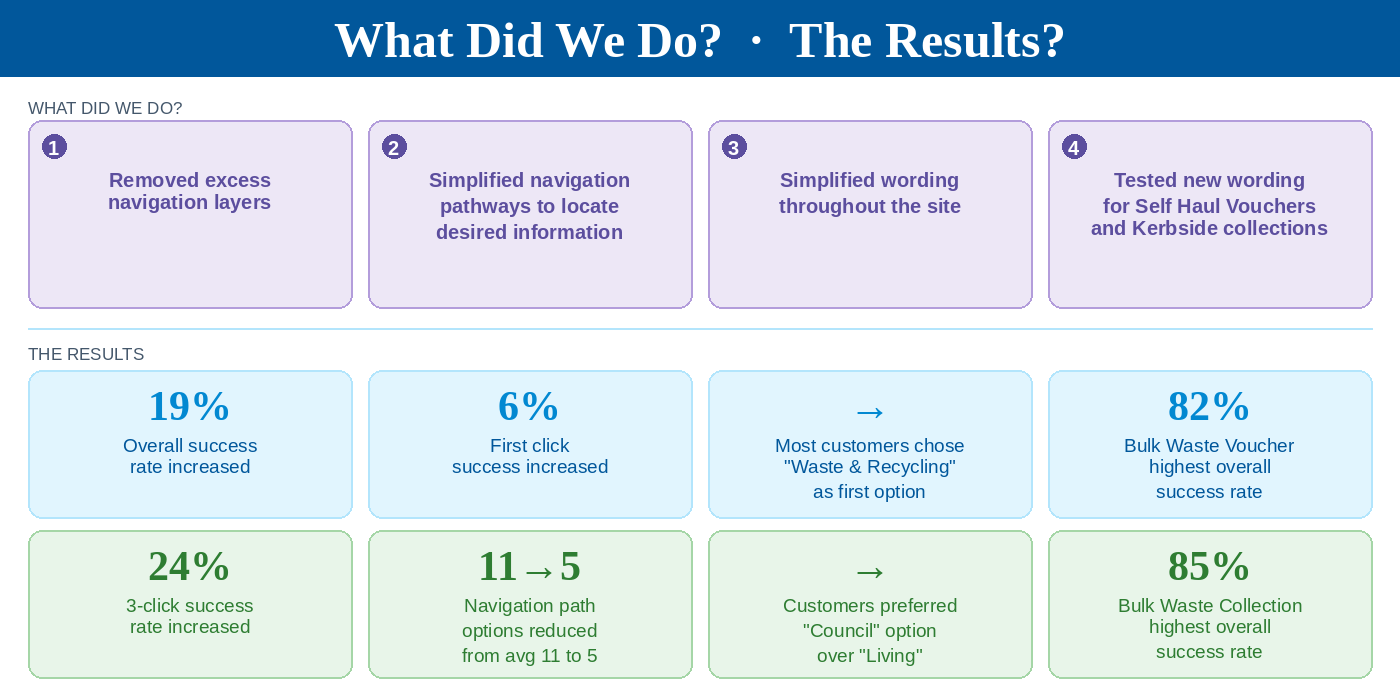
Success metrics